
Skip to content

Cart

Your cart is empty

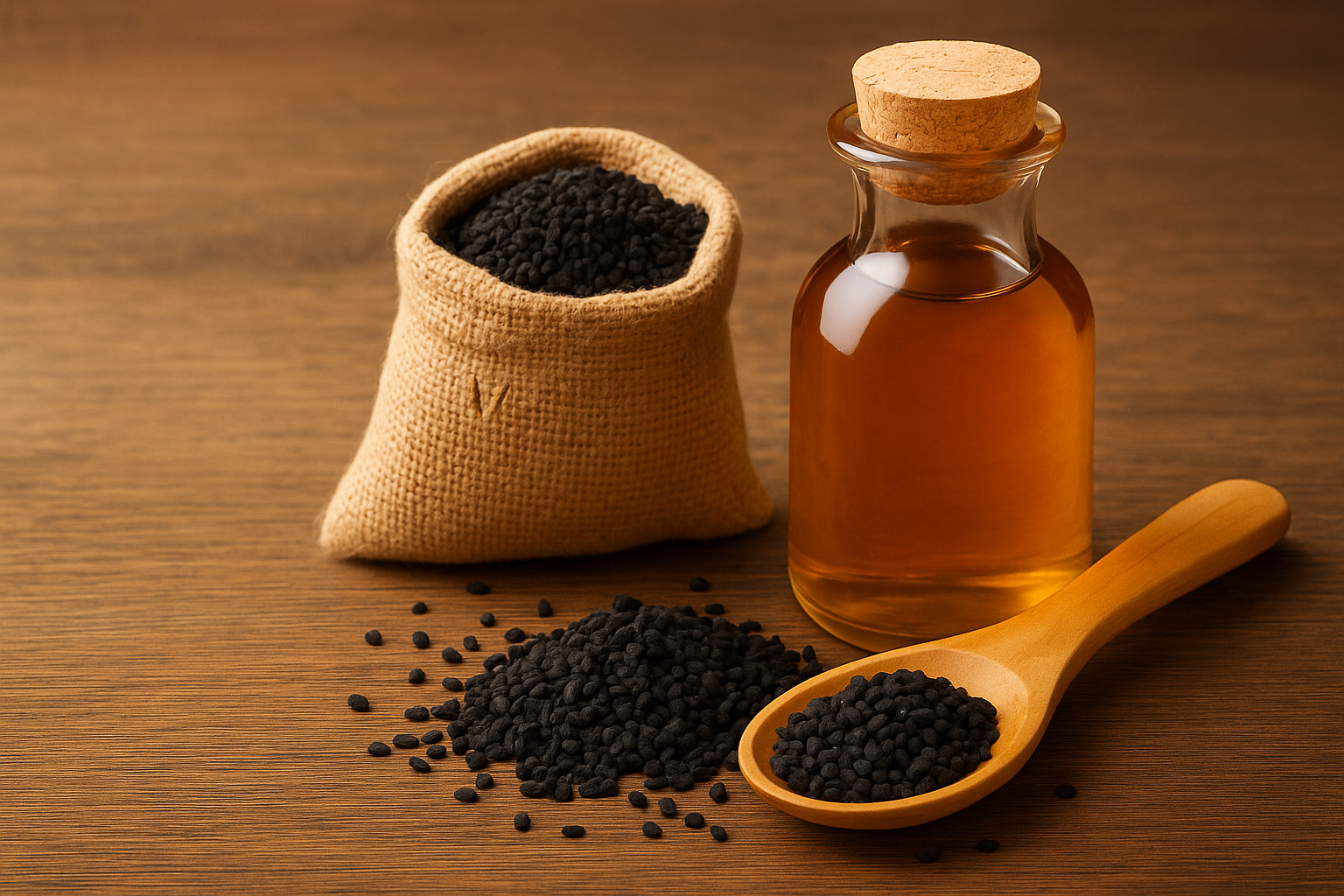
Black seed oil bottle and nigella sativa seeds — traditional wellness botanical NZ

Black Cumin (Kalonji) & Black Seed Oil NZ: Unlocking Nature's Ancient Secret for Wellness

Written by Vaughn Vincent Torralba  ·  Natural Health Writer, Herbicare NZ

Vaughn writes in-depth wellness guides for the Herbicare blog, exploring the traditional heritage of botanical supplements and their role in modern natural health routines across New Zealand.

Have you ever heard about black cumin (kalonji)? It’s a tiny seed that people have valued for thousands of years across many different cultures. From ancient Egypt to traditional Indian medicine, it has long been part of traditional wellness practices. And right here in New Zealand, more and more health-conscious individuals are discovering black seed oil as a botanical option to support their everyday wellness.

This guide explores what makes black cumin and its oil so interesting — its fascinating background, the traditional uses documented across cultures, and some thoughts on how to include it in your daily routine.

What are black cumin (kalonji) and black seed oil?

You might hear it called kalonji, Nigella sativa, or simply "black seed." It’s an annual plant that produces small, dark, fragrant seeds — and these seeds are where the botanical interest begins.

Historical timeline of black cumin use across ancient cultures

A rich history rooted in tradition

Black cumin’s story spans thousands of years and many cultures:

  • Ancient Egypt: Black cumin seeds were found in King Tutankhamun’s tomb, reflecting their historical significance [1].
  • Ayurvedic medicine: In traditional Indian practice, kalonji has been used across a range of traditional wellness applications [2].
  • Islamic tradition: Black seed holds a notable place in Islamic medicine, referenced in classical texts [3].
  • Traditional Chinese medicine: Some TCM practices have incorporated similar seeds for their warming botanical properties.

From seed to oil: cold-pressing

While the seeds can be used in cooking, black seed oil offers a more concentrated form of the plant’s naturally occurring compounds. The best quality black seed oil is typically produced by cold-pressing — pressing the seeds without heat or harsh chemicals. This process aims to preserve the oil’s naturally occurring compounds, including thymoquinone (TQ), the primary active constituent [4].

The naturally occurring compounds in black seed oil

Black cumin’s long history of traditional use has attracted growing scientific interest. The main compound, thymoquinone (TQ), is the subject of ongoing research exploring its properties and potential applications.

Diagram showing the key compounds in black seed oil including thymoquinone

Research into black seed oil has explored a range of areas including immune function [5], antioxidant properties [6], digestive wellness [7], respiratory health [8], and skin support [9]. Studies have also examined cardiovascular markers [10], blood sugar levels [11], and brain health [12]. It’s important to note that this research is ongoing, findings vary across studies, and black seed oil is a dietary supplement — not a medicine.

Why choose Herbicare Black Seed Oil in New Zealand?

At Herbicare, we carefully source our black seed oil to meet high quality standards. Our oil is:

  • Pure and potent — made from quality Nigella sativa seeds
  • Cold-pressed — to help retain the naturally occurring thymoquinone content
  • Thoroughly tested — for purity and potency, so you know what you’re getting

Shop Herbicare Black Seed Oil →

How to use black seed oil every day

Suggested use

A common suggested amount for adults is 1–2 teaspoons daily, taken straight or mixed with honey, juice, or a smoothie. Black seed oil capsules are also available for a convenient daily format. Like any supplement, start with a smaller amount and increase gradually. If you have health conditions or take medication, consult your doctor before use — especially if pregnant, breastfeeding, or taking blood thinners.

Cooking with kalonji seeds

Kalonji seeds offer a unique, slightly nutty flavour. Try sprinkling them on bread or naan before baking, adding them to curries and lentil dishes, scattering them over salads, or incorporating them into homemade pickles and chutneys.

Topical use for skin and hair

Black seed oil’s antioxidant properties make it a popular choice for topical wellness use. Mix a few drops with a carrier oil (like jojoba or almond) and apply to the skin. A small amount can also be worked into the scalp or added to shampoo or conditioner.

Things to be aware of

  • Pregnancy and breastfeeding: Consult your doctor before use — research in these groups is limited.
  • Blood-thinning medicines: Black seed oil may have a mild blood-thinning effect — use with caution and medical guidance.
  • Diabetes medicines: May influence blood sugar — monitor closely if managing diabetes with medication.
  • Low blood pressure: Use carefully if you naturally have low blood pressure.

Common questions

Is black cumin the same as black seed?
Yes — black cumin, black seed, and kalonji all refer to Nigella sativa. The names are used interchangeably.

What is the difference between black cumin seeds and black seed oil?
The seeds are the whole plant product, often used as a culinary spice. The oil is a concentrated extract that contains higher levels of thymoquinone and other active compounds.

How long does it take to see results?
Results vary between individuals and depend on consistency, the amount used, and individual biology. Botanical supplements are generally understood to work gradually as part of an ongoing lifestyle practice.

Can children take black seed oil?
Consult a paediatrician or healthcare professional before giving any supplement to children.

Are there any New Zealand regulations for black seed oil?
In New Zealand, black seed oil is generally classified as a food supplement under the Food Act 2014, regulated by the Ministry for Primary Industries (MPI) [13]. Herbicare ensures all products meet applicable NZ food safety requirements. Contact us with any questions.


Citations:

[1] Zohary, D., Hopf, M., & Weiss, E. (2012). Domestication of Plants in the Old World. Oxford University Press.
[2] Ahmad, A., et al. (2013). Asian Pacific Journal of Tropical Biomedicine, 3(10), 964–978. doi.org
[3] Sahih al-Bukhari. Book 76, Hadith 5687. sunnah.com
[4] Ramadan, M. F., & Mörsel, J. T. (2002). Journal of the American Oil Chemists’ Society, 79(9), 897–903.
[5] Majdalawieh, A. F., & Fayyad, M. W. (2015). European Journal of Pharmacology, 761, 268–274.
[6] Gali-Muhtasib, H., et al. (2006). International Immunopharmacology, 6(11), 1286–1296.
[7] Tavakkolifar, H., et al. (2020). Journal of Functional Foods, 69, 103953.
[8] Boskabady, M. H., et al. (2013). Pharmacology & Pharmacy, 4(1), 1–8.
[9] Akbari, A., et al. (2020). Current Opinion in Pharmacology, 55, 126–133.
[10] Namazi, N., et al. (2015). Journal of Functional Foods, 17, 720–727.
[11] Bamosa, A. O., et al. (2010). Journal of Clinical Lipidology, 4(5), 416–419.
[12] Abulfadl, Y. S., et al. (2018). Journal of Pharmacopuncture, 21(3), 159–166.
[13] New Zealand Ministry for Primary Industries — Food Act 2014.


Disclaimer: The information in this article is provided for general educational and informational purposes only. It does not constitute medical advice and is not intended to diagnose, treat, cure, or prevent any disease or health condition. Herbicare Black Seed Oil is a dietary supplement, not a medicine. Research into black seed oil is ongoing and findings should be interpreted in context. Always read the label and follow the directions for use. If you have a health condition, are pregnant or breastfeeding, or take prescription medication, consult a qualified healthcare professional before adding any supplement to your routine. Individual results vary. This product has not been evaluated by Medsafe.

Leave a comment

This site is protected by hCaptcha and the hCaptcha Privacy Policy and Terms of Service apply.

All comments are moderated before being published.

Read more

Calm morning scene with herbal tea and ashwagandha supplements — Herbicare NZ wellness
Adaptogens

Finding Your Calm with Ashwagandha

Struggling with stress and sleepless nights? You are not alone. Dive into our comprehensive guide on Ashwagandha, an ancient adaptogenic herb that may be the natural solution you have been searchin...

Read Article: Finding Your Calm with Ashwagandha

Blog posts

Calm morning scene with herbal tea and ashwagandha supplements — Herbicare NZ wellness
Adaptogens

Finding Your Calm with Ashwagandha

Struggling with stress and sleepless nights? You are not alone. Dive into our comprehensive guide on Ashwagandha, an ancient adaptogenic herb that may be the natural solution you have been searchin...

Read Article: Finding Your Calm with Ashwagandha
Black seed oil bottle and nigella sativa seeds — traditional wellness botanical NZ
Black Seed Oil NZ

Black Cumin (Kalonji) & Black Seed Oil NZ: Unlocking Nature's Ancient Secret for Wellness

Unlock the timeless potential of black cumin (kalonji) and premium black seed oil. This powerful natural remedy, cherished for millennia, may offer incredible support for your immune system, digest...

Read Article: Black Cumin (Kalonji) & Black...